

When comparing a reservoir for a Camry, establish both the vehicle application and the supplied assembly. The example here is the listed Australian ASV70 sedan with the 2.5L 2AR-FE petrol engine and automatic transmission, within 09/2017–02/2021. The Camry badge or a “2.5 litre” title alone does not settle that identification.
Then check the package. The selected reservoir is listed with a cap, hose and mounting bracket. An offer for a bare bottle should not be treated as the same package simply because its main photograph has a similar white tank body.
Read the model and engine fields together
Use the VIN, build month, ASV70 code and 2AR-FE engine identification as a group. The linked application does not establish a match for an earlier Camry series or a different engine. Broad catalogue family headings can cover several versions, so use the actual vehicle fields and original reference.
The ASV70 reservoir assembly product page records reference 16470-25042, superseding 16470-25041, for its stated scope. Confirm the original and application before relying on the reference relationship alone.
Compare the hose and bracket as well as the bottle
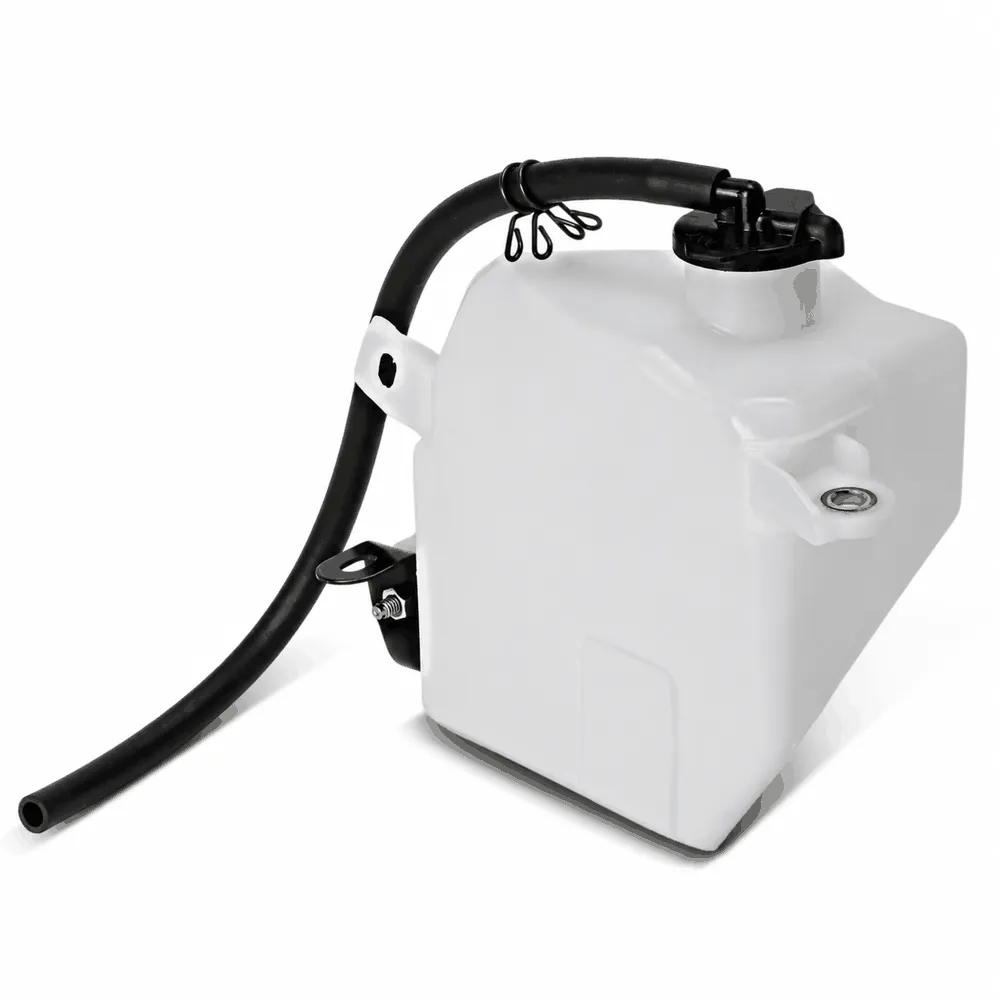
The attached hose, mounting ears and bracket are useful comparison points in this view. A filler-neck close-up on its own cannot establish that those features agree. Request a complete view and compare it from the same direction as the original assembly.
Keep the hose arrangement and body profile in the check rather than planning to force an unconfirmed bottle into the existing mounting position. A similar cap colour is not a substitute for an agreed reference and physical configuration.
Included components are not the workshop’s complete parts list
The selected package lists the tank, cap, hose and bracket. That describes the supplied assembly; it does not establish that every fastener, consumable or other item required for a particular repair is included. Confirm additional requirements with the installer.
Package photographs also do not establish the cooling-system filling quantity or coolant specification. Those belong to the vehicle’s own service information after the replacement identity and repair scope have been confirmed.
Make the enquiry specific
Send the VIN, build month, engine and model codes, original reference and accessible views of the tank profile, mounting ears, bracket and hose arrangement. Mention previous tank or engine changes if known. Keep any inspection of the cooling system safe and avoid opening it while hot.
If a detail does not agree, resolve it before selecting the linked assembly. A part-identification comparison does not establish that replacing the reservoir will cure an overheating or coolant-loss complaint; have the workshop diagnose that complaint separately.
Prepared from application records and the linked product photographs. The featured workshop scene is an AI-generated editorial illustration. Information reviewed on 3 November 2026.