

A radiator photograph can be rotated or taken from the opposite face. Before describing an outlet as upper, lower, left or right, establish which way the assembly is being viewed. That simple step makes the selected UZJ100 connection comparison much clearer.
The example here is the listed Australian UZJ100R wagon with the 2UZ-FE 4.7L V8 petrol engine and automatic transmission, within 08/2002–04/2005. The 100 Series badge alone does not settle the application.
Use the whole assembly as an orientation reference
The UZJ100 V8 automatic radiator is referenced to 16400-50210. Compare the original number, filler-neck and cap arrangement, large coolant hose outlets, smaller transmission-cooler fittings and mountings together.
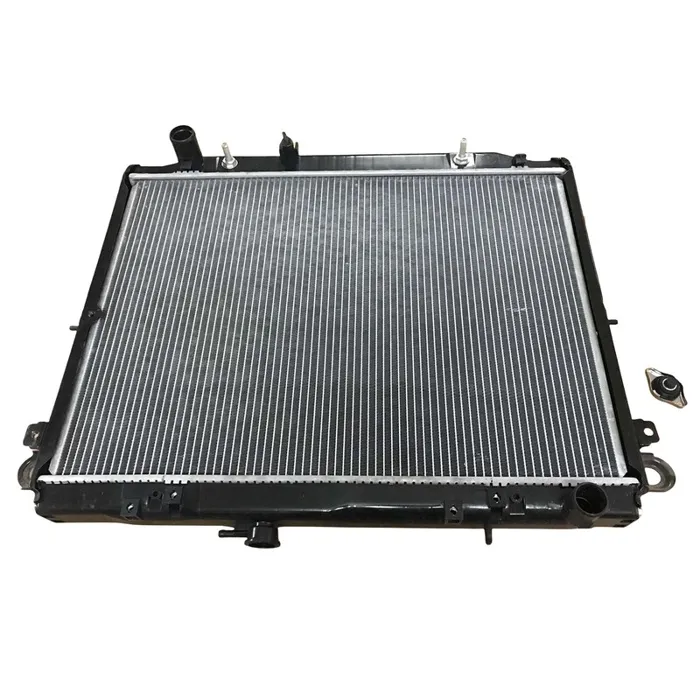
The coolant outlets are diagonally positioned on this selected assembly, and the automatic configuration has two cooler fittings. Compare corresponding views rather than assuming that the top edge of an image represents the radiator’s installed top edge.
A close-up is useful once its location on the full assembly is clear. If only a cropped outlet view is supplied, ask for a complete view and the mounting arrangement so the comparison remains traceable.
Compare the package and application limits
The selected package contains the radiator and the separate cap shown. Cooling fans, shroud and hoses are not included. Confirm any other required items with the installer instead of treating the pictured radiator as a complete cooling pack.
Diesel, six-cylinder petrol, manual and other build ranges are outside this product’s stated scope. A broader catalogue family entry should not override that narrower application.
Reference identity is one part of the check
The Australian Sakura radiator catalogue provides reference-family context for the UZJ100 automatic application. The linked PFA page keeps the specific build scope and actual replacement photographs used here.
Send the VIN, build month, engine and gearbox details, original reference and accessible complete and detail photographs when requesting confirmation. Mention changes to the engine, gearbox or cooling arrangement.
The workshop should diagnose any cooling complaint and determine the service procedure separately. This guide helps identify the configuration; it does not supply a pressure specification, filling quantity or repair sequence.
Prepared from application records, catalogue checks and the linked product photographs. The featured workshop scene is an AI-generated editorial illustration. Information reviewed on 3 November 2026.